
Tennessee’s researchers are constantly working to solve real-world problems. We’re at the forefront of AI development and application in the United States and around the globe.
RESEARCH SPOTLIGHT
Pedestrian Safety
A team led by Airton Kohls, a research associate in UT’s Center for Transportation Research, in partnership with the City of Knoxville and local technology company Cubic, will use AI and sensor technologies to improve pedestrian safety at signalized intersections, focusing on streets adjacent to UT’s campus.
Automotive Inspections
Assistant Professor of Electrical Engineering and Computer Science Sai Swaminathan, in partnership with Volkswagen Group of America, is leading a team working with VW’s North American manufacturing facility located in Chattanooga to develop AI systems and methodologies for real-time quality inspection on their production lines.
AI for Business
An interdisciplinary team of professors from UT’s Business Analytics and Statistics and Education departments are studying how AI impacts workforce demands and the evolving skill sets required in the modern job market.
Case Studies & Findings
In spring 2024, graduate students from four colleges presented research to scholars, industry professionals, and policymakers during the SMART Workshop sponsored by AI Tennessee.
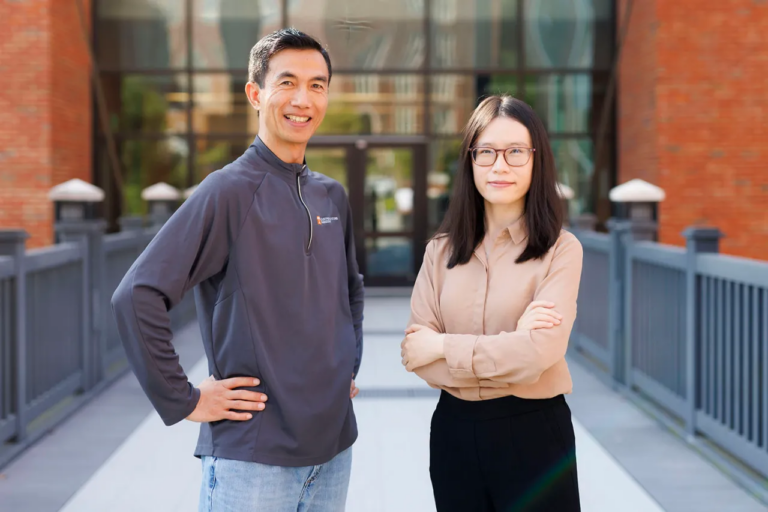
Researchers in the University of Tennessee, Knoxville’s Tickle College of Engineering are using artificial intelligence and machine learning to provide treatment plans to breast cancer patients more quickly by analyzing pathology reports and other clinical records to determine how much breast cancer is in the body.
OUR RESEARCH
AI Tennessee focuses on interdisciplinary research creating AI-driven solutions to the complex technical, economic, and social challenges facing our communities.

Manufacturing Data Simulation
A team led by Associate Professor of Management Science Bogdan Bichescu and Associate Professor of Business Analytics and Statistics Charles Liu, in partnership with East Tennessee software company ChiAha, will improve the company’s product innovation by using AI for data simulation in manufacturing environments.
AI in Additive Manufacturing
A team led by Associate Professor of Mechanical Engineering Subhadeep Chakraborty and Professor of Mechanical and Aerospace Engineering Bradley Jared, in partnership with the Edison Welding Institute — a nonprofit advancing manufacturing through engineering and innovation — and One-Off Robotics — a Chattanooga-based robotic metal additive and subtractive equipment integrator — will apply AI to modeling, control, optimization, and uncertainty quantification to optimize efficiency of additive manufacturing processes.
Identifying Animal Illness
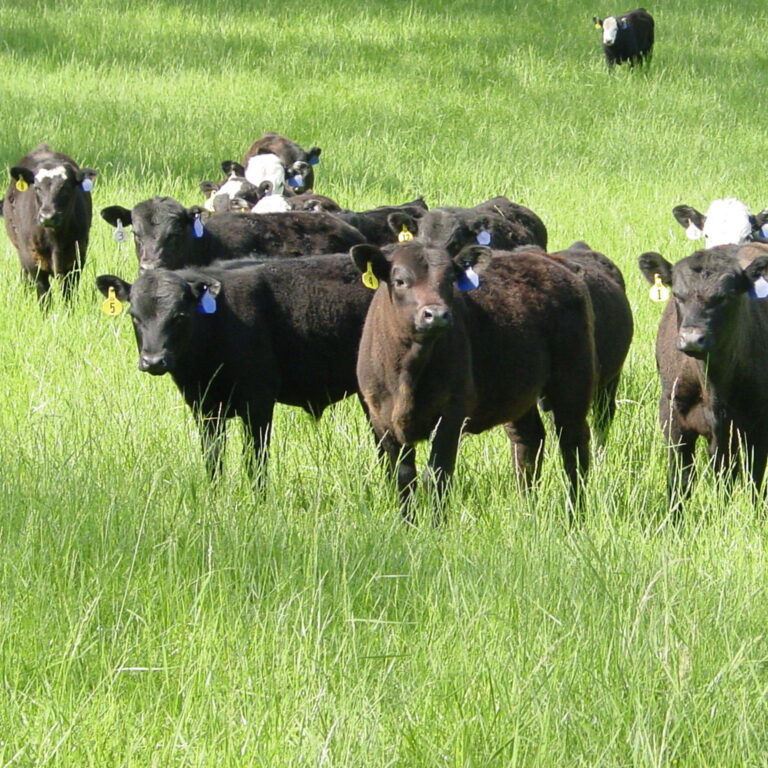
A team led by Assistant Professor of Biosystems Engineering Hao Gan, in partnership with Enterprise Sensor Systems, will develop technology to rapidly identify cattle with infectious diseases using AI and hyperspectral imaging.

A team led by Professor of Industrial and Systems Engineering Jim Ostrowski, in partnership with defense technology firm Vibrint, will harness AI and quantum computing technologies in geospatial intelligence for defense applications.

Reducing Football Injuries
Researchers and students are working under the direction of Assistant Professor of Electrical Engineering and Computer Science Hector Santos-Villalobos, in partnership with UT Athletics and the Joe Gibbs Human Performance Institute — a biomechanical engineering research facility — to develop AI-driven performance analytics for the UT football team to reduce player injuries.

Cybersecurity Solutions
Assistant Professor of Electrical Engineering and Computer Science Fnu Suya, will lead a team in partnership with Cisco’s Advanced Security Initiatives Group to develop and explore AI technologies and methodologies to inform the company’s network cybersecurity solutions.
Environmental Mapping
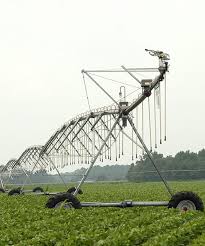
A team led by Dongarra Professor of High-Performance Computing Michela Taufer, in partnership with a global leader in cutting-edge AI and high-performance computing technologies, will accelerate performance of large language models and other AI tools for real-world impact in global irrigation mapping, environmental and earth sciences, and molecular dynamics.